
LanguageCert Academic Test Guide for Students and Visas
Introduction Many students compare the languagecert academic test with IELTS because both meet an English …

LanguageCert Academic is an English language test used for higher education and visa purposes, and it’s often compared with IELTS. Both exams assess listening, reading, writing, and speaking, but the structure, pacing, and scoring differ. I’ll walk you through how the LanguageCert Academic test works, how it compares with IELTS, and what this means for students and visa applicants.
This guide is for students planning study, professionals meeting English language requirements, and visa applicants choosing one exam. I’m writing from an instructor’s point of view, with a visa consultancy lens. You’ll see how each test fits real goals. And where people usually slip up.
LanguageCert Academic is an English proficiency exam for study and visa use, similar to IELTS but built differently. The LanguageCert Academic test measures listening, reading, writing, and speaking through a flexible format and clear scoring system. Because of that, many students now compare it directly with IELTS, especially those already familiar with IELTS exam listening practice and the IELTS writing test structure.
I hear this question all the time. Which test is better for study or migration? This guide is for students, professionals, and visa applicants who want a steady, honest answer. I’ll explain the test format, scoring, and skill transfer. I’ll also show how visa authorities read these results, from exam day to the final report.
LanguageCert Academic is an English language test designed for academic study and professional use. The LanguageCert Academic exam measures proficiency across listening, reading, writing, and speaking. It suits students applying to higher education, professionals meeting registration standards, or visa applicants needing recognised English evidence.
Many institutions accept it as proof of English language proficiency. Some UK visa pathways also recognise LanguageCert Academic SELT results. Acceptance depends on the institution or visa authority, so checking before you book really matters.
Position wise, LanguageCert Academic sits alongside IELTS and PTE Academic. IELTS is still more widely known, but LanguageCert offers flexible test dates and delivery options. I’ve seen students choose it when timing or test centre access is tight. Different route. Same destination.
The LanguageCert Academic test assesses four core skills:

Each section focuses on real academic language use. Depending on region and rules, the language cert test can be taken at a centre or online, which many international students find practical.
Listening tasks use recorded academic and semi academic settings. Reading includes texts similar to university materials. LanguageCert Academic writing tasks require structured responses that show clarity and control. Speaking involves a live or recorded interaction to assess fluency and accuracy.
What sets this test apart is flexibility. There are many test centre options, and online delivery can reduce long waits. For students juggling deadlines, that’s helpful. The test report is also clear, with aligned scores across skills.
From an instructor view, the structure feels straightforward. No tricks. But moving from another exam still takes adjustment. Timing, task focus, and marking aren’t the same. Preparation makes the difference.
Listening tasks test understanding of talks and conversations. Question types include multiple choice and note completion. Students used to IELTS listening practice or IELTS exam listening practice often find the level familiar.
The key difference is pacing. IELTS listening scoring rewards speed and accuracy under time pressure. LanguageCert expects steady attention. I’ve seen students rush and miss small details. Slow down. It usually pays off.
LanguageCert Academic writing focuses on clarity and academic tone. Tasks ask students to explain ideas or respond to information. Structure matters more than complex vocabulary, which surprises students trained only on IELTS writing.
Compared with the IELTS writing test, there’s less focus on charts and visuals. Instead, ideas and logical support come first. Writing is still marked on coherence, grammar, and task response, similar to IELTS writing task 2 marking criteria.
The languagecert academic test includes a speaking component that checks real communication skills. You answer questions and discuss topics clearly and logically. In purpose, it’s similar to the IELTS speaking test and the IELTS exam speaking test used worldwide.
Both exams look at fluency, range, and accuracy. But LanguageCert speaking tends to feel more structured. For some students, that’s calming. For others, it just feels clearer.
Both exams assess the same core skills. Listening, reading, writing, and speaking. The difference sits in task style, pacing, and scoring focus.
Listening skills transfer well. Students who’ve done IELTS listening practice already understand accents and speed. Reading skills also carry across, especially with academic texts. Writing usually needs the most adjustment. IELTS writing test tasks are fixed, while LanguageCert tasks vary more.
Speaking skills transfer strongly. Confidence, clarity, and organisation matter in both exams. From what I’ve seen, students who prepare for one exam can adapt to the other with the right guidance.
Here’s the main point. Preparation isn’t wasted. IELTS study builds a solid base. You just need to adjust timing and task focus. That’s why multi exam preparation works.
IELTS writing task 1 focuses on charts or letters, and there are many IELTS writing task 1 examples used in classrooms and online. IELTS general writing uses letter tasks for migration pathways, which differ from academic reporting.
IELTS writing task 2 requires an essay on set topics. Common IELTS writing task 2 topics include education, technology, health, and society. Many students practise with IELTS writing task 2 examples to build structure and ideas. LanguageCert Academic writing still looks for structured argument, but the prompts differ. Assessment checks logic, clarity, and language control.
The IELTS speaking test uses an interview style with set stages. IELTS speaking questions often feel personal and broad, especially in Part 1 and Part 2.
LanguageCert speaking tasks are more guided. This suits students who like clear steps and expectations. Strong speakers usually perform well in both exams. Nervous speakers often prefer structure.
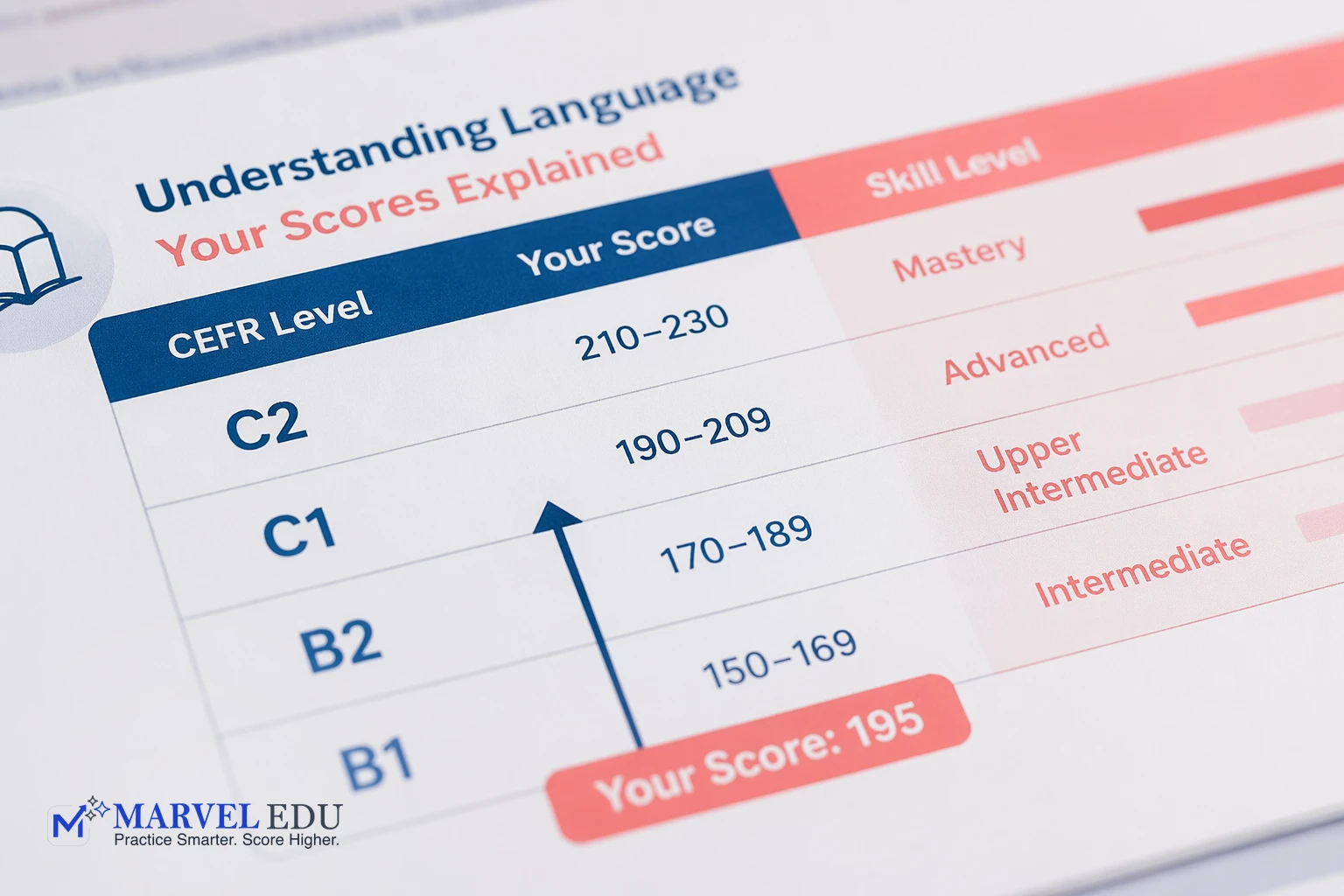
The language cert score chart shows performance across each skill. Scores align with CEFR levels, from B1 through to C2. Institutions use these levels to judge readiness for study or work.
For example, a C1 level often aligns with an IELTS band of around 7.0 to 8.0. Visa authorities and institutions use these comparisons when checking English language requirements. The LanguageCert Academic SELT label is especially important for UK visa use.
I always tell students to confirm score requirements early. Different education providers and visa pathways set different thresholds. A score only helps if it meets the rule you’re applying under.
IELTS materials are still very useful when preparing for the languagecert academic test. IELTS listening practice builds strong listening habits. Even IELTS listening scoring methods help track accuracy and identify weak areas.
You can adapt IELTS writing task 2 examples by changing how you respond to the prompt. Focus on developing ideas clearly rather than copying structure blindly. For speaking, practise giving clear answers and extending your points, just as you would for IELTS speaking and common IELTS speaking questions. These skills transfer well.
I usually suggest treating IELTS practice as a base. Then refine with targeted LanguageCert Academic mock test tasks. One skill set. Two exams.
Visa rules often decide the exam choice more than people expect. Some visas accept IELTS only. Others allow LanguageCert. For certain UK visa routes, LanguageCert Academic SELT applies and must be booked under approved conditions.
If you’re planning both study and migration, choose carefully. IELTS general writing suits some migration pathways. Academic tests suit study. I’ve seen students retake exams because they planned poorly. Frustrating, honestly.
My advice stays simple. Check visa rules first. Then choose the test that covers future plans. It lowers risk.
AI powered tools now give fast feedback on writing and speaking. That matters for both IELTS writing and language cert academic writing development. LanguageCert Academic mock test platforms can highlight gaps early, before they affect scores.
Using one platform for multiple exams helps too. Shared data tracks progress across skills. Practice results guide what to focus on next. Students tend to improve faster. Not always, but often.
The most common mistake is timing. Students apply IELTS pacing to the LanguageCert Academic test. It doesn’t always work.
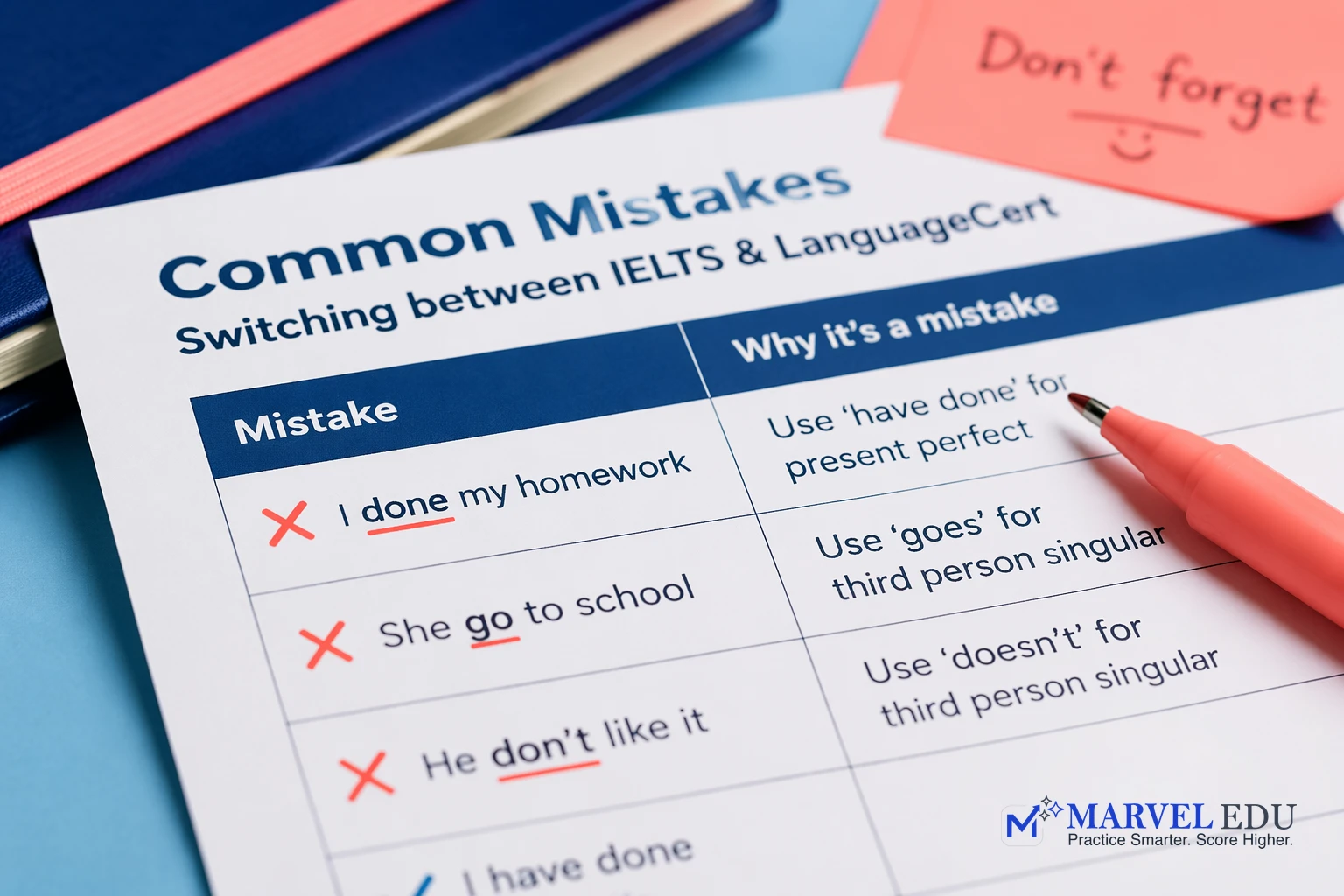
Another issue is writing focus. Using IELTS writing task 1 examples the wrong way can hurt scores. Some students also ignore score equivalency when planning visas. That’s risky.
Slow down. Read each task carefully. Plan with purpose.
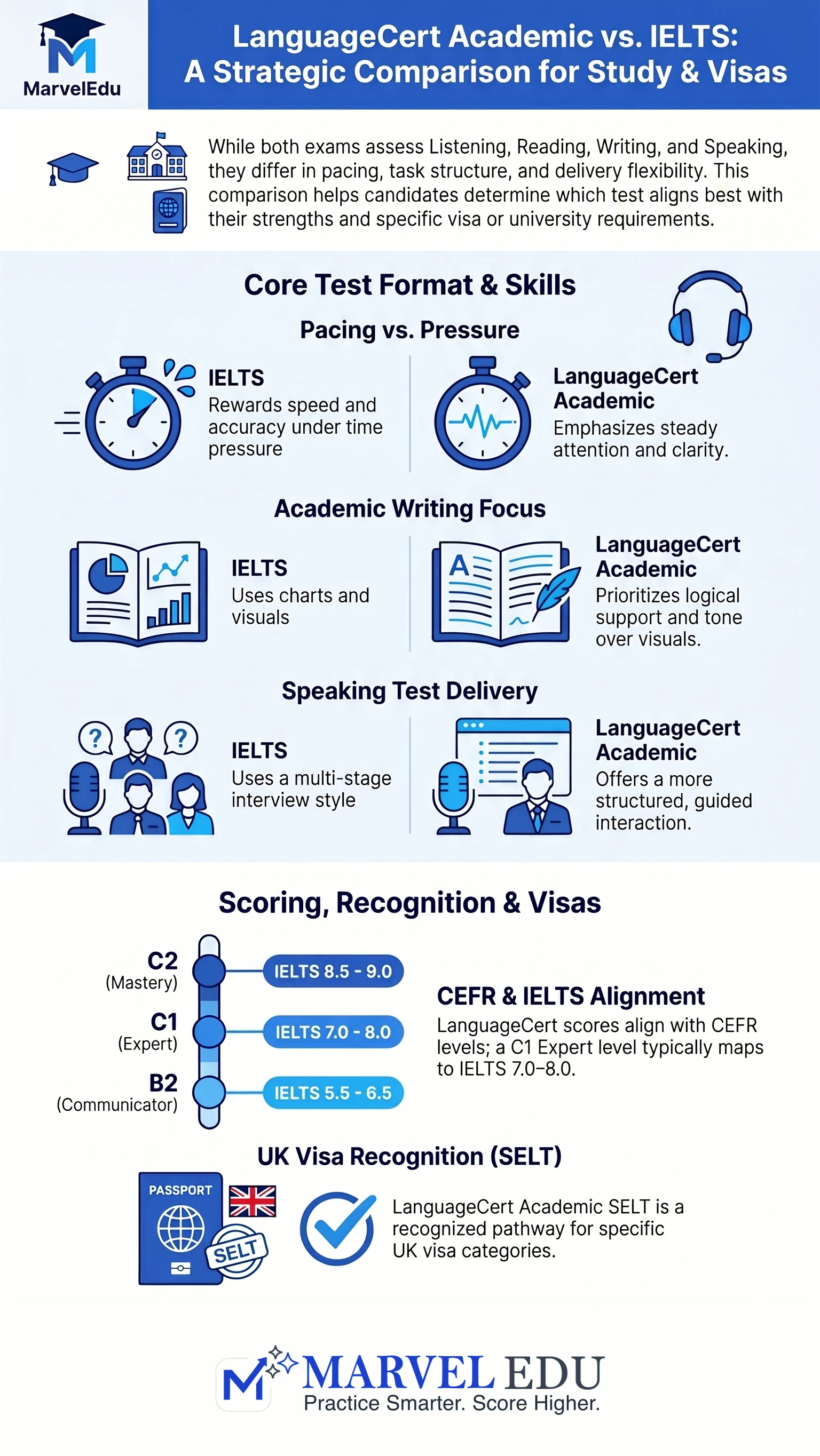
This visual compares test format, skills, and score use. It’s a quick reference for students choosing between LanguageCert Academic and IELTS writing test options.
Yes, many institutions accept LanguageCert Academic for higher education. Always confirm acceptance with the specific institution before booking.
Yes, IELTS preparation supports listening, reading, writing, and speaking. You’ll just need to adjust for different task styles and pacing.
LanguageCert scores align with CEFR levels. Institutions often map these to IELTS bands, with C1 roughly equal to 7.0 or higher.
It depends on the visa pathway. Some UK visas accept LanguageCert Academic SELT, while others require IELTS. Always check official guidance.
Neither test is easier overall. The better choice depends on your strengths, timing, and goals. I’ve seen students succeed with both.
LanguageCert Academic suits students who want flexible testing and clear scoring. IELTS remains strong for broad recognition and long term familiarity. Both exams assess real academic English skills across listening, writing, and speaking.
The right choice depends on study plans, visa goals, and timing. Prepare with intention. Use shared skills. And plan ahead. That’s the step many people miss.
Introduction Many students compare the languagecert academic test with IELTS because both meet an English …

A LanguageCert score chart explains how your English skills are measured across listening, reading, writing, …

The LanguageCert test is a secure English language test used for study, work, and visa purposes in many …