
LanguageCert Academic vs IELTS Exam Guide for Study and Visa
LanguageCert Academic is an English language test used for higher education and visa purposes, and it’s often …

The LanguageCert test is a secure English language test used for study, work, and visa purposes in many countries. It measures listening, reading, writing, and speaking skills and aligns with CEFR levels. Many students choose this exam because it offers flexible dates, online delivery, and clear score reporting.
The language cert test is an English language test designed to assess real world language ability. It has grown quickly thanks to flexible booking, fast results, and remote options. For many learners, that flexibility matters more than long standing tradition.
I often speak with students who are torn between this exam and IELTS. Some are finishing secondary education and want a smoother test experience. Others are visa applicants who need clear and simple proof of proficiency. From my instructor perspective, the right english language test depends on goals, deadlines, and confidence levels. One size rarely fits all. Sound familiar?
LanguageCert Academic is a formal exam that checks academic english language proficiency. It’s used for university entry, professional pathways, and selected visa applications. The languagecert academic test assesses listening, reading, writing, and speaking in one structured assessment.
Many education providers accept this certificate as proof of an english language requirement. Acceptance depends on the country and institution, so checking first is essential. The test follows CEFR level standards from B1 through C2, including C1 Advanced. That alignment helps universities and migration officers compare results across exams. Honestly, that clarity is a big reason recognition keeps growing.
The language cert test format includes four core skills. Listening tasks focus on real conversations and short lectures. Reading sections test understanding of arguments, details, and meaning. Writing tasks assess clarity, structure, and accuracy. Speaking is delivered through recorded or live formats, depending on the level.
The exam is computer based and can be taken at home with remote proctoring. No travel required. But there’s a catch. Rules are strict. I’ve seen strong students lose marks because of poor setup. Camera position matters. Internet stability too.
Compared to traditional test centres, this exam feels modern and efficient. Still, it demands proper preparation. No shortcuts here.
The language cert score chart shows how results align with CEFR levels. Scores typically range from B1 to C2. Each cefr level describes what a learner can do across listening, reading, writing, and speaking.

CEFR alignment matters for visas and study because decision makers rely on it. According to LanguageCert guidance updated in 2024, CEFR mapped results allow fair comparison with IELTS and other exams. Universities often set minimum levels, not just raw scores. Understanding this chart helps students avoid costly mistakes. And yes, I’ve seen that happen.
LanguageCert Academic and the IELTS exam both assess the same four skills. But the experience feels different. IELTS uses fixed sections with strict timing. LanguageCert offers more flexibility and, in some regions, modular options.
From what I’ve seen, many students find LanguageCert less stressful. The environment feels calmer. IELTS is still more widely known. Both are valid. The better choice depends on acceptance, comfort, and timelines. There’s no universal winner. Anyone telling you otherwise is oversimplifying it.
Listening skills are tested in both exams using audio recordings and questions. IELTS listening practice often includes varied accents and fast speech. IELTS exam listening practice also requires strong focus under time pressure. LanguageCert also uses natural pace audio, which catches some learners off guard.
Common problems include losing focus and missing keywords. Daily listening practice helps. Short sessions work best. News clips. Podcasts. Practice recordings. Over time, your brain adjusts. I’ve watched that shift happen again and again.
Students preparing for multiple exams benefit from a simple routine:
These habits support stronger ielts listening scoring outcomes and reduce stress on test day.
IELTS listening scoring is based on correct answers only. Opinions don’t count. Each correct response improves your band score. Small errors, like spelling mistakes, can lower results.
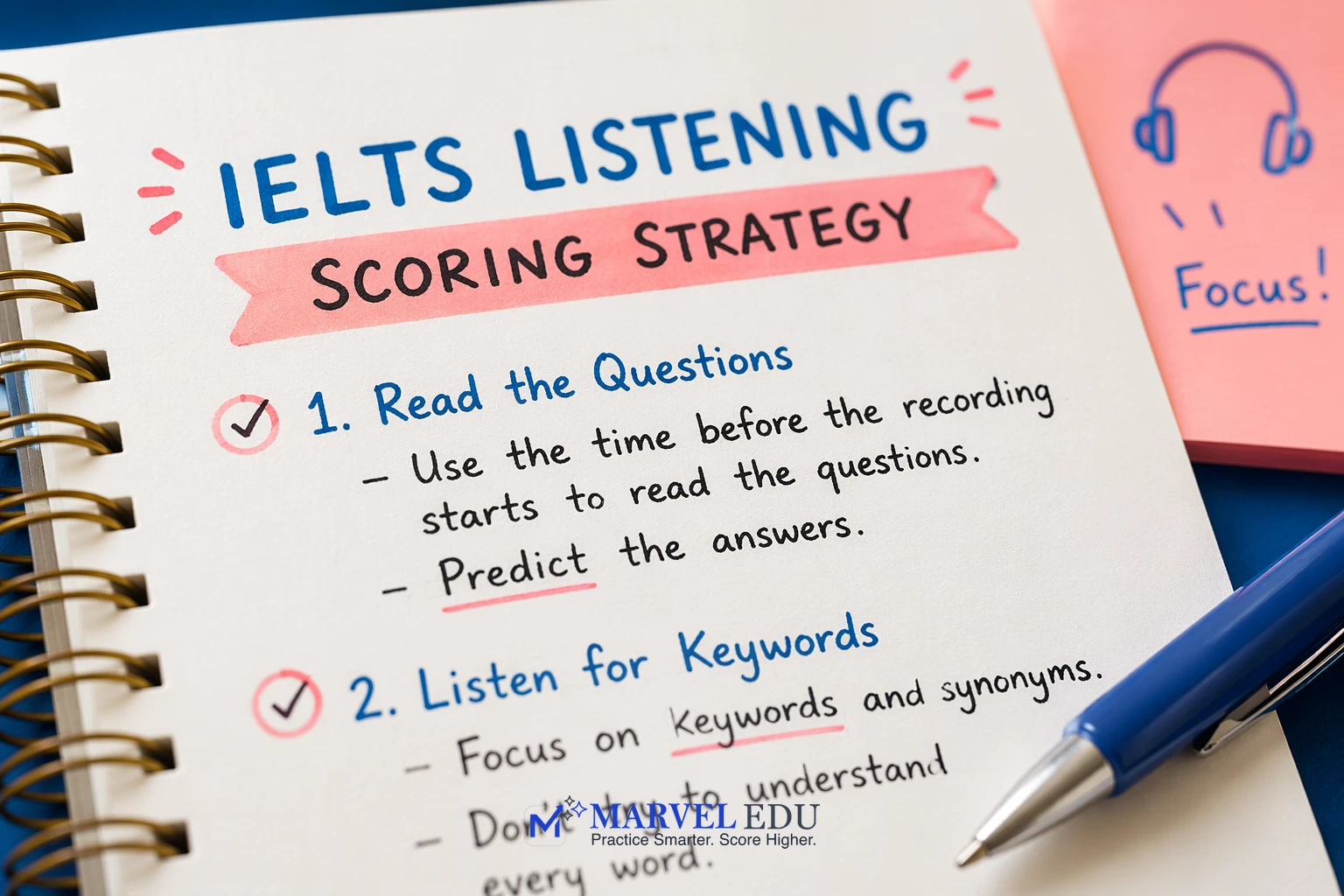
Many students forget to predict answers before listening. That’s a common mistake. Always read the questions first. Take brief notes. And if you miss one answer, move on. Don’t panic. That habit alone can lift scores more than people expect.
The IELTS writing test includes two tasks. Academic and IELTS general writing share timing but differ in content. Task 1 focuses on data or letters. Task 2 requires an essay.
Writing has a strong impact on the final band score. Examiners assess task response, coherence, vocabulary, and grammar. Many learners practise speaking and listening but ignore writing. That imbalance costs marks. Trust me, I’ve seen it too often.
IELTS writing task 1 asks candidates to describe information. Tasks often include charts, tables, maps, or processes. Clear structure matters more than complex vocabulary.
Strong ielts writing task 1 examples include a short overview, grouped details, and clear comparisons. Don’t list numbers without explanation. Explain trends instead. Keep sentences simple. Usually, that’s enough.
IELTS writing task 2 requires an essay of at least 250 words. Topics often cover education, technology, health, and social issues. Common ielts writing task 2 topics repeat across test dates.
Using ielts writing task 2 examples helps students plan ideas faster. Examples show how to organise arguments and stay focused. But don’t memorise them. Examiners notice. Adapt the structure, not the content.
The IELTS exam speaking test has three parts. Part one covers personal topics. Part two involves a short talk. Part three explores ideas in more depth. Typical ielts speaking questions focus on daily life, opinions, and experiences.
LanguageCert speaking uses recorded responses or live interviews, depending on level. Both formats assess fluency, pronunciation, and coherence. Clarity matters more than speed. Slow down if you need to. That’s allowed.
Many learners rush their answers. That affects pronunciation and grammar. Pausing is fine. Silence isn’t failure.
In listening, students often overthink responses. Simple answers are usually correct. Feedback based practice helps fix these habits. I’ve seen students improve just by reviewing errors once a week. Small changes. Big impact.
English test results support visa and study applications. Migration departments set clear english language requirements. Choosing the wrong exam or level can delay decisions.
Selecting the right english test saves time and money. This is where integrated visa advice really helps. Matching the exam to the visa pathway reduces retakes. And yes, it happens more often than people expect.
Language cert test booking is completed online. Candidates select a date, time, and location, often from home. The language cert test fee varies by country but is usually competitive with IELTS pricing.
Language cert test dates are flexible, with many sessions available weekly. This suits urgent visa timelines. Still, book early. Places fill quickly, especially during peak study periods.
Preparing for IELTS and LanguageCert at the same time is possible. Core skills overlap. Listening, reading, writing, speaking. Same foundation.
AI feedback now helps students learn English faster. It highlights grammar issues, timing problems, and coherence gaps. From an instructor view, this saves hours. It also builds confidence across exams. Efficient. Practical.
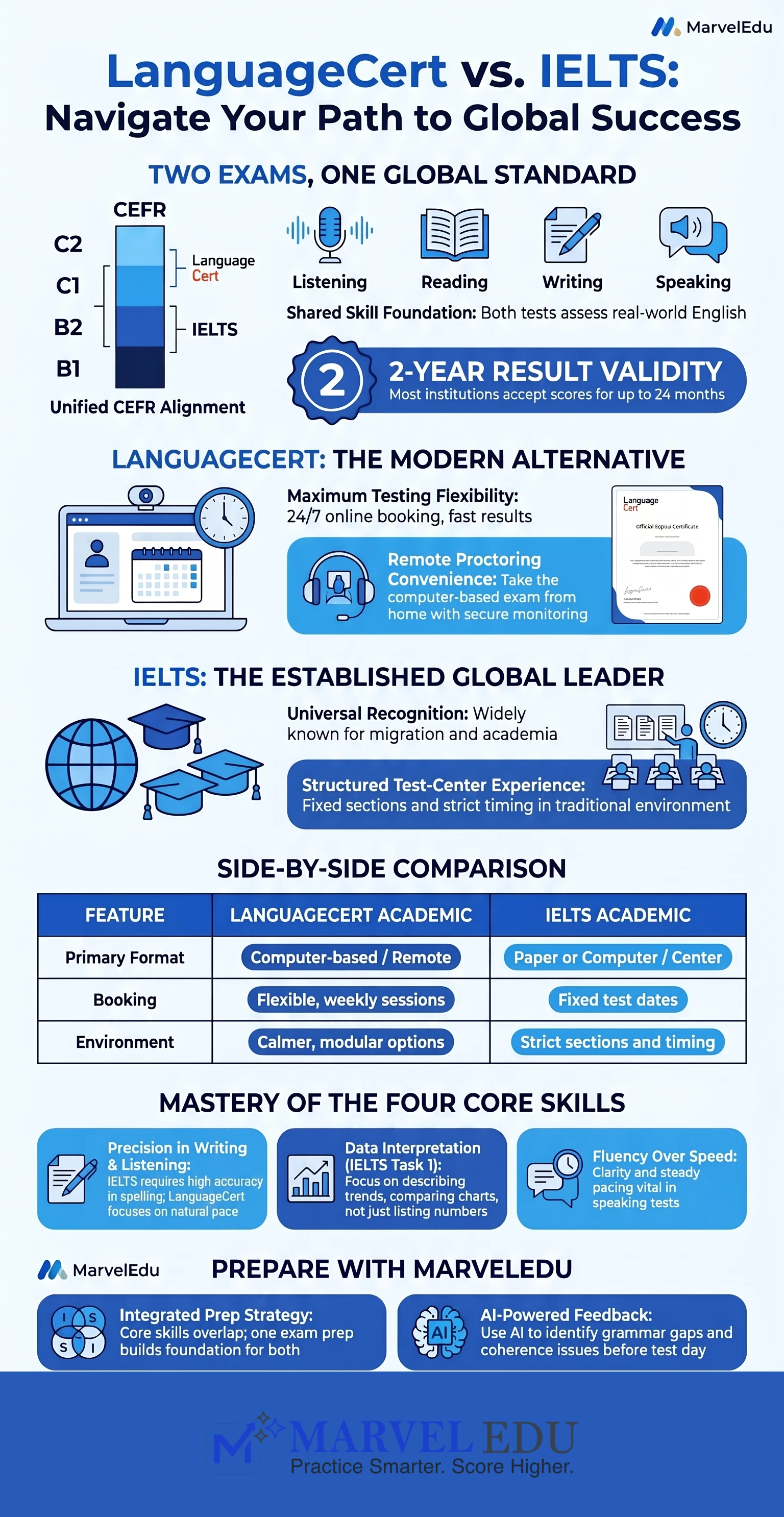
A simple comparison shows test format, scoring, and CEFR alignment side by side. It helps students decide faster. Visual summaries work well, especially under pressure.
Yes, the LanguageCert Academic test is accepted by many institutions and visa authorities. Acceptance depends on the country and provider. Always confirm before booking.
LanguageCert uses CEFR aligned scores shown in the language cert score chart. IELTS bands can be matched to CEFR levels using official comparison charts. This allows fair assessment of english language proficiency.
Yes, you can. Both exams test similar skills across listening, reading, writing, and speaking. A combined study plan often saves time and effort.
Neither test is easier. The experience simply feels different. Some students find LanguageCert less stressful due to flexible delivery.
For the ielts speaking test, focus on clear answers, steady pace, and natural language. Practising common ielts speaking questions improves fluency and confidence.
Most institutions accept results up to two years old. Visa authorities may apply specific rules, so always check requirements.
The language cert test and IELTS both support study and visa goals. Understanding scores matters just as much as choosing the exam. From my experience, students perform best when exam preparation and visa planning align. Focus on skill development, not just the test format. That approach tends to deliver better outcomes.
LanguageCert Academic is an English language test used for higher education and visa purposes, and it’s often …

Introduction Many students compare the languagecert academic test with IELTS because both meet an English …

A LanguageCert score chart explains how your English skills are measured across listening, reading, writing, …